YÀRÁ ÌTÀN | SERIES ONE
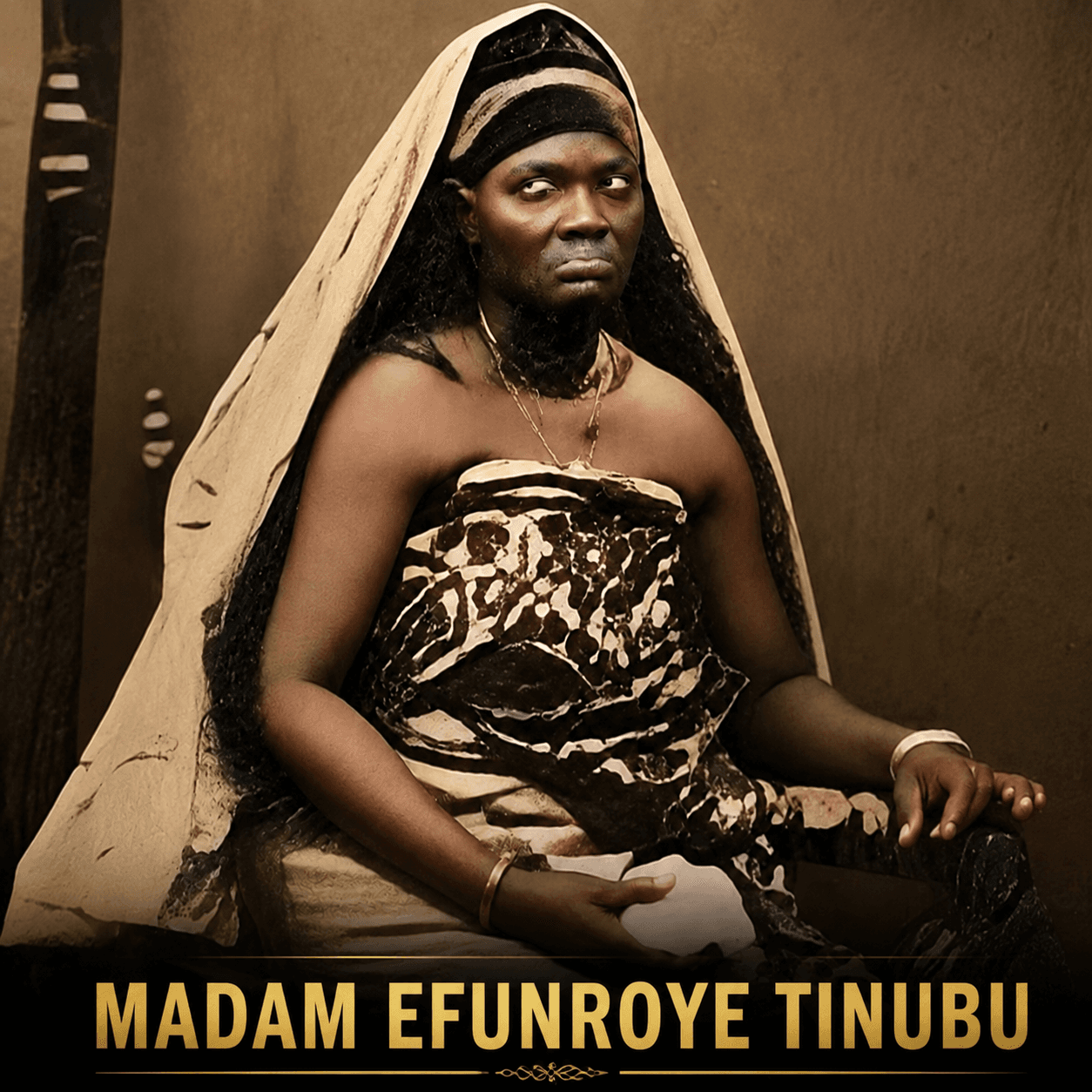
MADAM EFUNROYE TINUBU
Power, Commerce, Politics and Legacy
LESSON 002: THE WORLD AROUND EFUNROYE TINUBU
War, Displacement, Trade and a Changing Yorubaland
In our first lesson, we met Madam Efunroye Tinubu.
But before we go deeper into her marriages, businesses, political connections, and eventually the uncomfortable conversation about slavery, there is something we need to understand first.
What kind of world was she living in?
Because sometimes, when we look at people who lived two hundred years ago, we make the mistake of imagining their world through the eyes of our own.
Efunroye Tinubu did not grow up in the Nigeria we know today.
There was no Nigeria.
There was no modern Lagos State or Ogun State.
What existed were kingdoms, towns, communities, rulers, trading networks, and political alliances that could change very quickly.
The early nineteenth century into which Efunroye was born was anything but peaceful.
YORUBALAND WAS CHANGING
For generations, the Oyo Empire had been one of the great political powers of the region.
Its influence stretched far beyond Oyo itself.
But by the beginning of the nineteenth century, that old order was breaking apart.
Internal political struggles, rebellions, military conflicts, and wider regional changes weakened Oyo. As its authority declined, the political balance across Yorubaland began to change.
When a powerful system begins to collapse, the consequences do not remain inside the palace.
Ordinary people feel them, too.
Wars followed.
Communities fought.
Towns were attacked.
People fled.
Families were separated.
Some people lost their homes.
Others lost their freedom.
And some never returned to the places where their families had lived for generations.
This was the world surrounding the young Efunroye.
THEN CAME THE OWU WAR
One of the major conflicts of this period was the Owu War.
We have to be careful here because history is rarely as simple as saying, “This person caused the war” or “that kingdom was entirely responsible.”
There was no single reason behind everything that happened. Political rivalry, economic interests, struggles for influence, and the changing balance of power in Yorubaland all formed part of a much bigger picture.
But one thing is certain.
The destruction of Owu became part of a much larger period of upheaval.
People scattered.
Survivors searched for safety.
Different Egba groups were also displaced during these years.
Eventually, something remarkable happened.
Out of displacement came a new city.
ABEOKUTA: A CITY BUILT BY PEOPLE LOOKING FOR SAFETY
Around 1830, displaced Egba people began settling around Olumo Rock.
The settlement became known as Abeokuta, a name associated with taking refuge under the rock.
Other displaced people, including Owu groups, would also become part of the growing settlement.
So when we talk about nineteenth-century Abeokuta, we should remember something important.
Abeokuta was not simply another old Yoruba town continuing life as usual.
It became a new home for people whose lives had been disrupted by war.
People arrived carrying memories of where they had come from.
They rebuilt communities.
They rebuilt markets.
They rebuilt political institutions.
They farmed.
They traded.
They had to defend the new settlement they were building.
Now think back to something we discussed in Lesson 001.
This is why we were careful about simply saying that Efunroye Tinubu was “born in Abeokuta around 1810.”
If she was born around 1810, the Abeokuta that later became famous had not yet been established in that form.
It may look like a tiny detail.
But small details matter when we are preserving history.
That is why we check.
WAR DID SOMETHING ELSE TOO
There is another part of this story that we can not avoid.
War produced captives.
In a world where different forms of slavery already existed and where an enormous Atlantic market for enslaved Africans had developed, captives could become commodities.
Some remained within African societies.
Some were sold from one trader to another.
And some eventually reached the coast, where human beings were sold into the transatlantic slave trade.
This is where the histories of warfare, African participation, and European Atlantic commerce begin to meet.
But we must be careful again.
It would be wrong to suggest that every Yoruba war was simply fought to capture people for the slave trade.
Politics mattered.
Territory mattered.
Security mattered.
Rivalries mattered.
Control of important trade routes mattered.
And economic interests mattered, too.
History becomes dangerous when we take one part of a complicated story and use it to explain everything.
WHY THE COAST MATTERED
While wars and political changes were reshaping the interior, something else was happening along the coast.
Places such as Badagry and Lagos connected inland trading networks with Atlantic commerce.
Goods travelled towards the coast.
Imported products travelled inland.
Merchants built relationships across long distances.
Unfortunately, human beings were also part of those commercial networks.
Badagry became an important coastal trading centre, while Lagos grew increasingly important for both commerce and politics.
Now, we are beginning to see why understanding this world matters to the story of Efunroye Tinubu.
THIS WAS THE WORLD SHE LEARNED TO NAVIGATE
Efunroye did not create this world.
She was born into it.
But being born into a system does not automatically remove responsibility for the choices a person later makes within that system.
That distinction is important.
Understanding is not the same thing as excusing.
As Efunroye grew into a trader, she learned how to operate within a world where commerce and political power were closely connected.
Then, her marriage to Adele Ajosun, the exiled Oba of Lagos, brought her even closer to coastal trade and royal politics.
Suddenly, the places we have been discussing were no longer simply places around her.
Badagry.
Lagos.
Abeokuta.
Each would become an important chapter in her story.
And so would the changing relationship between African rulers, African merchants, and Europeans on the coast.
BUT SOMETHING ELSE WAS CHANGING ACROSS THE ATLANTIC
By this period, Britain had already abolished its participation in the transatlantic slave trade in 1807 and was increasingly trying to suppress the trade.
But, passing a law in Britain did not make the slave trade disappear from West Africa overnight.
The networks were already deeply established.
African merchants had interests.
African rulers had interests.
European and American traders had interests.
Plantation economies across the Atlantic continued to create demand.
At the same time, other forms of commerce, including palm oil and agricultural products, were becoming increasingly important.
And here again, history refuses to give us a simple story.
Britain's campaign against the slave trade would eventually exist alongside its growing political and commercial involvement on the West African coast.
We will come to that properly later.
When we eventually discuss Britain, abolition, and Lagos, we are not going to tell half of that story either.
NOW HER STORY CAN REALLY BEGIN
This is why we did not rush from Lesson 001 into calling Madam Tinubu a heroine or a slave trader.
Look at the world around her first.
A weakening empire.
Wars across Yorubaland.
Communities being displaced.
Abeokuta emerged from that displacement.
Trade routes connecting the interior to the coast.
Lagos and Badagry are becoming important commercial centres.
African merchants building fortunes.
European interests expanding.
Slavery continuing.
Abolition gathering force.
And political power constantly changes hands.
Inside all of this was one woman learning how commerce worked and gradually building connections that would take her much further than anyone around her could probably have imagined.
Now we are ready to follow her.
Because in our next lesson, Efunroye's story takes us towards Adele Ajosun, Badagry, and Lagos.
That is where the trader begins her journey towards something much bigger.
TO BE CONTINUED...
YÀRÁ ÌTÀN | SERIES ONE: MADAM EFUNROYE TINUBU
NEXT: LESSON 003
EFUNROYE, OBA ADELE, AND THE ROAD TO LAGOS
The Marriage That Changed Her Story
We remember. We question. We learn. We preserve.
Àṣà kì í kú.
Omolola TalksTV
Preserving Yoruba Culture Through Storytelling