YÀRÁ ÌTÀN | SERIES ONE
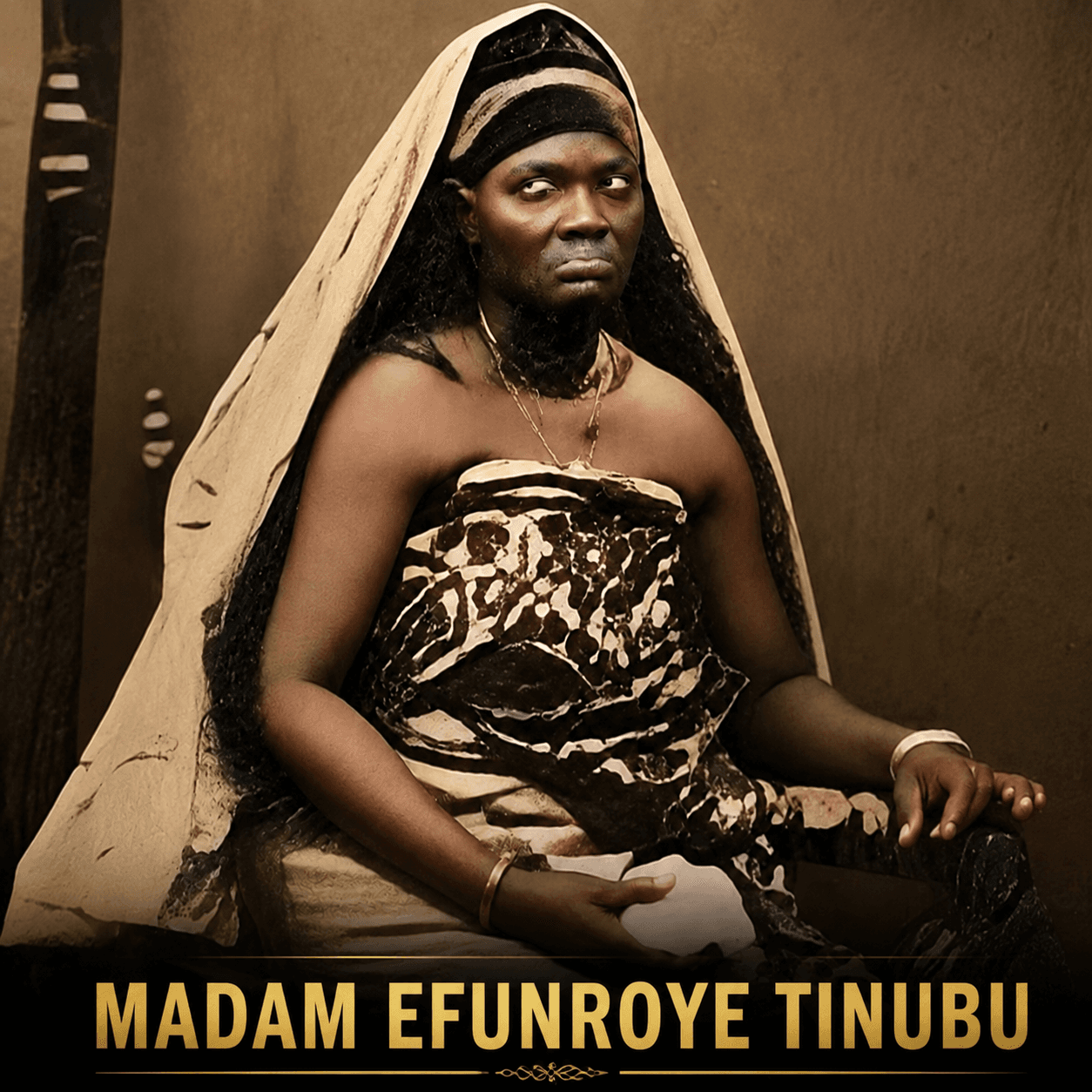
MADAM EFUNROYE TINUBU
Power, Commerce, Politics and Legacy
LESSON 005: EFUNROYE TINUBU AND THE SLAVE TRADE
What Do We Actually Know — and What Has the Internet Added?
There is no point creating Yàrá Ìtàn if we are going to become uncomfortable when history takes us somewhere we do not like.
So today, we need to talk about the part of Madam Efunroye Tinubu's story that continues to generate arguments whenever her name appears.
Slavery.
Was Efunroye Tinubu involved in the slave trade?
Yes.
The historical evidence is strong enough for us to say that clearly.
She participated in the buying and selling of enslaved people, and slavery formed part of the commercial world from which she built her wealth and influence.
We are not going to hide that because she was Yoruba.
We are not going to soften it because she was a powerful African woman.
And we are not going to remove it because there are other parts of her life that may inspire admiration.
But there is another thing we will not do.
We will not take every shocking statement circulating on the internet, attach it to her name, and call it history.
There is a difference between confronting uncomfortable evidence and repeating sensational stories simply because they make good social-media content.
So let us separate what we know from what we think we know.
FIRST, SLAVERY DID NOT BEGIN WITH EFUNROYE
Efunroye Tinubu did not create slavery.
Different forms of slavery and servitude existed in African societies long before her lifetime.
War captives could lose their freedom.
People could become enslaved through conflict, punishment, debt, and other circumstances.
But we also need to be careful here.
Saying slavery existed in Africa before Europeans became involved in the Atlantic trade must never become an excuse for pretending that the transatlantic slave trade changed nothing.
It changed a great deal.
European demand helped create an enormous overseas market for enslaved Africans.
European ships transported millions of Africans across the Atlantic.
European merchants and investors profited.
Plantation economies in the Americas depended heavily upon enslaved African labour.
African rulers, merchants, warriors, and intermediaries also participated in capturing, supplying, buying, and selling people.
These truths do not cancel one another.
They belong in the same history.
SO WHERE DOES EFUNROYE FIT?
By the time Efunroye became an important merchant, she was operating within trading networks that connected the Yoruba interior to coastal centres such as Badagry and Lagos.
Those networks carried many things.
Salt.
Tobacco.
Cloth.
Palm produce.
Firearms.
And human beings.
Efunroye traded across different commodities during her commercial career.
Enslaved people were among them.
That fact should not be controversial simply because people today disagree about what her overall legacy should be.
The more difficult questions are about the scale of her involvement and some of the specific stories later told about her.
And that is where we have to slow down.
“SHE OWNED 360 SLAVES.”
You may have seen this number before.
It appears repeatedly in modern accounts of Efunroye Tinubu.
Sometimes, it is presented as though somebody opened her household register yesterday and counted exactly 360 enslaved people.
History is rarely that convenient.
The figure has been repeated in biographies and secondary accounts, but repetition alone does not turn a claim into unquestionable fact.
So Yàrá Ìtàn will not present “360” as though there can be no historical uncertainty around it.
What we can say confidently is that Efunroye was a wealthy merchant who owned and used enslaved labour and participated in slave trading.
That is already serious enough.
We do not need an impressive number to make slavery more terrible.
One human being deprived of freedom was already one too many.
AND THEN THERE IS THE FAMOUS QUOTE...
There is another story associated with Efunroye that appears frequently online.
According to a later account of a slave-trading dispute, she supposedly declared that she would rather drown enslaved people than sell them below the price she wanted.
It is a horrifying statement.
And precisely because it is horrifying, we have to handle it responsibly.
The story can be traced to later biographical writing about Efunroye and is often repeated today as though we possess a recording or direct contemporary transcript of her words.
We do not.
That does not automatically prove the incident never happened.
But it does mean we should distinguish between a quotation attributed to her in later historical writing and words that we can independently establish she spoke exactly as reported.
That difference matters.
So if Yàrá Ìtàn ever mentions the statement, we will say it is attributed to her.
We will not turn an attributed quotation into unquestionable fact simply because it makes a dramatic headline.
BUT LET US NOT HIDE BEHIND UNCERTAINTY
This is equally important.
Questioning the reliability of a dramatic quotation does not erase the established evidence that Efunroye participated in slavery.
Sometimes, people make the opposite mistake.
Once one claim about a historical figure becomes uncertain, they begin treating everything about that person's involvement as doubtful.
No.
We have enough historical evidence to identify Efunroye Tinubu as a participant in the slave economy.
We simply do not need to exaggerate that evidence.
History deserves better than exaggeration.
WHAT HAPPENED AFTER THE 1852 TREATY?
Remember Lesson 004.
After British forces attacked Lagos and Akitoye returned to the throne, a treaty was signed in 1852 aimed at suppressing the slave trade in Lagos.
But signing a treaty and changing an economy are two different things.
Slave trading did not disappear overnight.
Networks continued.
People whose wealth and influence were connected to those networks did not simply wake up the following morning and abandon them.
There is evidence that Efunroye remained associated with slave trading after the treaty.
That placed her commercial interests increasingly at odds with the new political environment developing in Lagos.
But again, we need to remember what we established in Lesson 004.
BRITAIN DID NOT ENTER THIS STORY WITH CLEAN HANDS
Britain was now campaigning against the Atlantic slave trade.
That is historically true.
But Britain had previously been one of the major participants in that same transatlantic system.
British ships had transported enormous numbers of enslaved Africans.
British merchants had profited.
British plantation interests had profited.
British wealth had been connected to enslaved labour.
Britain outlawed its own slave trade in 1807 and later became a major force in suppressing the Atlantic trade.
Both chapters belong in the story.
So we are not going to tell this history as:
Africans were selling people until Britain arrived to rescue everybody.
That would be dishonest.
But neither will we tell it as:
Europeans did everything, and Africans had no responsibility.
That would also be dishonest.
African participation existed.
European participation existed.
The Atlantic market expanded the scale and profitability of human trafficking enormously.
Different people participated for different reasons and possessed very different levels of power within the system.
And beneath all those arguments about responsibility were the people who actually suffered.
THE PEOPLE WE SOMETIMES FORGET
When we discuss slavery, famous names can easily take over the conversation.
Efunroye Tinubu.
Kosoko.
Akitoye.
British consuls.
European merchants.
African rulers.
But there were millions of other people whose names we may never know.
The person was captured during a war.
The mother separated from her child.
The young person sold far away from home.
The person marched towards the coast without knowing where they were going.
The people forced onto ships.
The people who died before reaching the other side.
The people who survived and were forced to labour for somebody else's wealth.
Those people were not “commodities.”
They were human beings.
They had names.
Families.
Languages.
Memories.
Homes.
Beliefs.
Plans for lives they expected to live.
If our history becomes only an argument about whether Africans or Europeans were more guilty, we risk losing sight of the people who paid the actual price.
DOES THIS MAKE EFUNROYE A VILLAIN?
This is where I want us to resist the temptation we discussed from Lesson 001.
Some people will read everything we have discussed and immediately say:
“Then she was evil. End of story.”
Others may respond:
“Everybody was doing it then. Leave her alone.”
Neither response helps us understand history.
The fact that something existed within a particular society does not mean we have to pretend the people harmed by it did not suffer.
Recognising that Efunroye participated in slavery does not require us to erase every other part of her life.
She was a merchant.
She was politically influential.
She operated successfully in spaces dominated largely by men.
She participated in slave trading.
She traded other commodities.
She became involved in struggles over Lagos politics.
Later, she became an important figure in Abeokuta.
All of these can belong to one person.
Human beings are complicated.
History is complicated, too.
AND THERE IS ANOTHER QUESTION
If Britain was moving against slave trading, and Efunroye's interests increasingly collided with British influence, was her later confrontation with the British simply about slavery?
That answer is not straightforward, either.
Commerce was involved.
Political authority was involved.
The power of the Oba was involved.
British influence was expanding.
Efunroye's own enormous commercial and political influence was involved.
And Lagos itself was moving towards an even bigger confrontation over who truly controlled its affairs.
That brings us to the next chapter.
Eventually, the powerful woman who had helped shape Lagos politics would be pushed out of Lagos.
But leaving Lagos would not end Efunroye Tinubu's story.
Far from it.
Abeokuta was waiting.
And there, she would rebuild her influence again.
TO BE CONTINUED...
YÀRÁ ÌTÀN | SERIES ONE: MADAM EFUNROYE TINUBU
NEXT: LESSON 006
EFUNROYE TINUBU, BRITISH POWER AND HER EXIT FROM LAGOS
Was It Really Just About the Slave Trade?
We will look at her confrontation with British Consul Benjamin Campbell, the struggle over political and commercial influence in Lagos, why Oba Dosunmu was pressured to expel her, and how Efunroye eventually returned to Abeokuta
Once again, we will resist the easy version.
Because Britain was fighting the slave trade.
But Britain was also expanding its influence.
And Efunroye was resisting British interference.
But Efunroye also had interests of her own to protect.
Several things can be true at once.
That is why we study history instead of simply choosing sides.
We remember. We question. We learn. We preserve.
Àṣà kì í kú.
Omolola TalksTV
Preserving Yoruba Culture Through Storytelling