YÀRÁ ÌTÀN | SERIES ONE
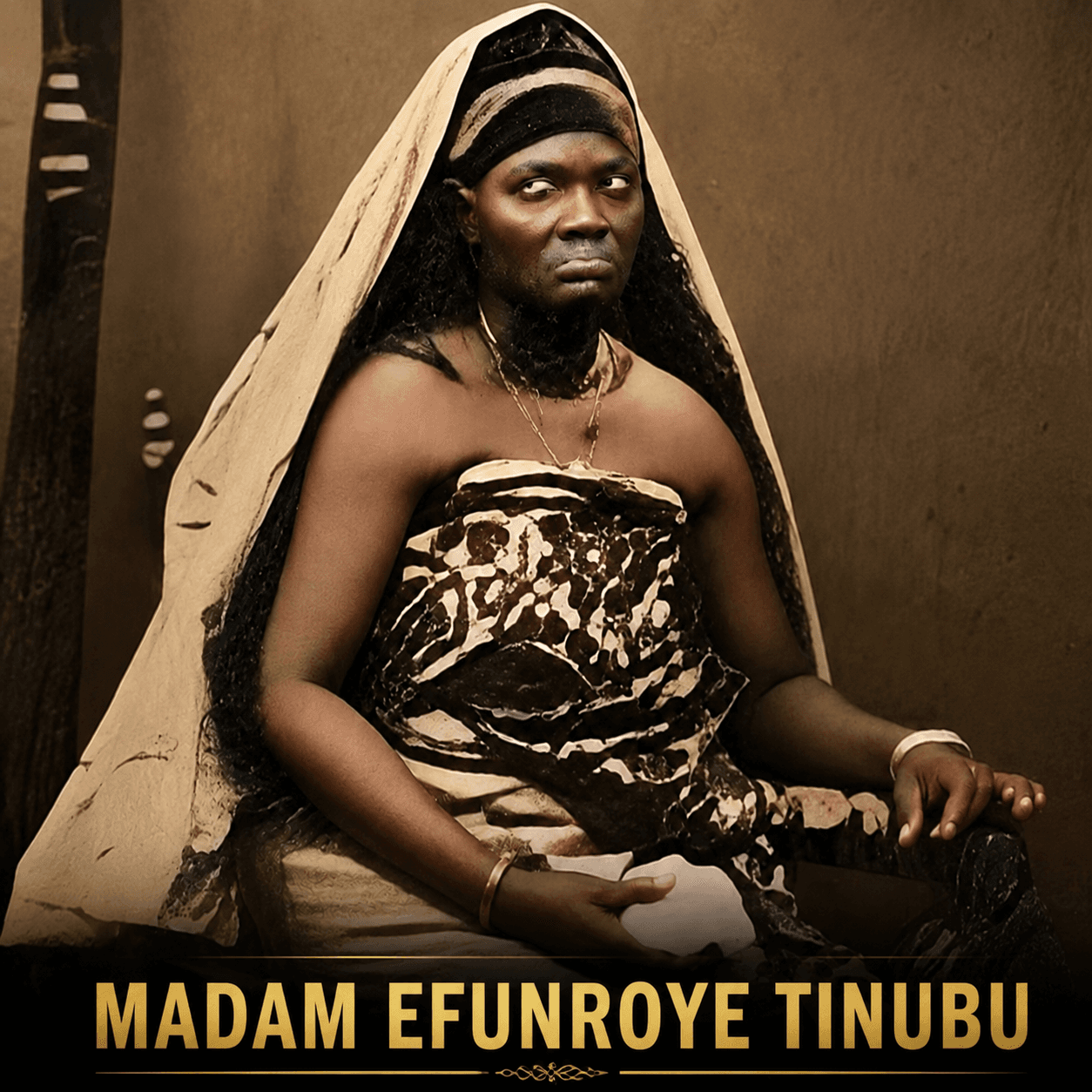
MADAM EFUNROYE TINUBU
Power, Commerce, Politics and Legacy
LESSON 004: AKITOYE, KOSOKO, AND THE BATTLE FOR THE LAGOS THRONE
When Efunroye Tinubu Became More Than a Merchant
In our last lesson, we followed Efunroye Tinubu from Badagry into Lagos.
We saw how her marriage to Oba Adele brought her closer to royal politics and how, even after Adele’s death, she did not disappear from the political scene.
Her businesses continued.
Her connections grew.
Her influence became stronger.
But Lagos itself was becoming increasingly unstable.
And soon, Efunroye would find herself caught in a struggle between two men who wanted the same thing:
The throne of Lagos.
Their names were Akitoye and Kosoko.
To understand what happened next, we first need to understand something important.
This was not simply a quarrel between two relatives.
The struggle for the Lagos throne was connected to commerce, royal succession, powerful chiefs, the slave trade, European interests, and the growing determination of Britain to interfere in the affairs of the West African coast.
This is where the story becomes complicated.
And this is exactly why Yàrá Ìtàn exists.
AFTER OLUWOLE’S DEATH
Oba Oluwole died in 1841 following an explosion involving gunpowder at the palace.
His death left Lagos needing another king.
Two important figures stood within the royal family.
One was Akitoye, a son of Oba Ologun Kutere.
The other was Kosoko, a grandson of Ologun Kutere.
Kosoko was ambitious and already had considerable support.
But his relationship with some powerful figures within Lagos politics was difficult.
Akitoye was eventually installed as Oba in 1841.
According to historical accounts, one of the people who supported Akitoye was Efunroye Tinubu.
This is an important moment in her story.
She was no longer simply the widow of a former king.
She had become a woman whose wealth, connections, and position allowed her to participate in the political struggles surrounding the throne.
But the matter was far from settled.
Kosoko had not disappeared.
AKITOYE MAKES A DANGEROUS DECISION
After becoming Oba, Akitoye faced a difficult question.
What should be done about Kosoko?
Kosoko remained a potential rival.
Some accounts say influential chiefs advised Akitoye against allowing him to return to Lagos.
The warning was simple:
A rival with supporters could eventually become a threat.
But Akitoye chose reconciliation.
Kosoko was allowed back.
Perhaps Akitoye believed family peace was possible.
Perhaps he believed bringing Kosoko closer would reduce the danger.
Whatever his reasoning, the decision did not bring lasting peace.
The rivalry continued.
In 1845, the struggle exploded.
KOSOKO TAKES LAGOS
Kosoko and his supporters challenged Akitoye.
Fighting followed.
Akitoye lost control of Lagos and fled.
Kosoko became Oba.
This changed Efunroye’s position immediately.
She had supported Akitoye.
The man she supported was gone.
The man who defeated him now controlled Lagos.
And politics rarely forget who stood on which side.
Efunroye eventually left Lagos and returned to Badagry, where she continued her commercial activities.
But her relationship with Akitoye did not simply disappear because he had lost the throne.
Neither did Akitoye abandon his desire to return.
And outside Lagos, another power was watching developments closely.
Britain.
BUT BEFORE WE TALK ABOUT BRITAIN...
There is something we need to make very clear.
Britain did not enter this story as a stranger to the slave trade.
For generations, British merchants, ships, and commercial interests had participated heavily in the transatlantic trade in enslaved Africans. British wealth was also connected to plantation economies in the Americas and Caribbean, where enslaved Africans were forced to work.
So when we say Britain abolished its slave trade in 1807, we need to understand exactly what that means.
Britain was ending its own legal participation in a system from which British interests had benefited enormously.
And even then, slavery itself did not suddenly disappear.
People remained enslaved in parts of the British Empire for years afterwards, while the transatlantic trade continued under other nations and through illegal trading networks.
Britain later used its navy and diplomatic pressure to suppress the Atlantic slave trade, including along the West African coast.
That part of the history is true.
But what came before it is also true.
Britain participated.
Britain profited.
Britain later abolished its own slave trade.
Britain later became one of the major powers working to suppress that trade.
We do not have to erase one chapter to acknowledge another.
SO, WHY WAS BRITAIN INTERESTED IN LAGOS?
By the middle of the nineteenth century, British officials were putting increasing pressure on rulers along the West African coast to end slave trading.
Lagos mattered because the trade in enslaved people continued through the region.
Kosoko was associated with commercial networks involved in that trade, while Akitoye became willing to cooperate with British demands for its suppression.
But abolition was not happening in an empty political space.
Lagos was strategically important.
It was commercially valuable.
It provided access to trading networks reaching into the interior.
European merchants were increasingly interested in commodities such as palm oil.
British political influence along the West African coast was growing.
So we should be careful about turning what happened next into a beautiful rescue story where Britain arrived, saved Africans, and went home.
That is not the history we are telling.
Neither are we going to pretend African participation did not exist.
African rulers and merchants participated in the trade.
European merchants participated in it.
Different people profited from human suffering at different points in the system.
The people who paid the greatest price were the men, women, and children whose freedom was taken away.
That is where our attention should remain.
Britain's campaign against the slave trade became an important part of nineteenth-century West African history.
But Britain was not entering that history with clean hands.
As we will eventually see, British involvement in Lagos did not end with abolition.
Political influence would grow.
Commercial influence would grow.
Eventually, Lagos itself would come under British colonial rule.
That is another chapter.
And when we reach it, we will tell that truth too.
WHERE DID EFUNROYE STAND?
This is perhaps one of the most fascinating contradictions in Efunroye Tinubu’s story.
She supported Akitoye.
Yet Efunroye herself had participated in the slave trade.
That alone should warn us against trying to divide everyone in this story neatly into “good people” and “bad people.""
People acted from different combinations of loyalty, business interest, political survival, and personal ambition.
Efunroye’s support for Akitoye should, therefore, not automatically be interpreted as opposition to slavery.
Her relationship with Akitoye had political roots.
Their interests were connected long before Britain made abolition a central condition of its intervention.
This distinction matters.
Because once we begin changing people’s motives to make history easier to understand, we are no longer preserving history.
We are rewriting it.
AKITOYE LOOKS FOR A WAY BACK
From exile, Akitoye sought support to regain his throne.
British officials increasingly saw him as someone with whom they could work.
Negotiations with Kosoko over ending the slave trade failed to produce the outcome Britain wanted.
Tension increased.
Eventually, Britain decided to use force.
In December 1851, British warships attacked Lagos.
The confrontation became known historically as the Bombardment of Lagos.
Kosoko’s forces resisted.
But British naval firepower was overwhelming.
After intense fighting, Kosoko fled Lagos.
Akitoye returned.
He was restored as Oba.
But Lagos was no longer the same.
Neither was Akitoye’s throne.
When an outside power helps return a king to power, that assistance rarely comes without expectations.
THE TREATY THAT FOLLOWED
In January 1852, Akitoye signed a treaty with Britain for the suppression of the slave trade in Lagos.
The treaty prohibited slave trading and strengthened British influence in Lagos affairs.
This was a major turning point.
For Efunroye, it also created a serious problem.
The political side she had supported had returned to power.
But the commercial environment around that victory was changing.
One of the trades from which she had benefited was now under increasing attack.
This is where we begin to see another side of her relationship with European power.
Efunroye could support Akitoye and still resist developments that threatened her own commercial interests.
History allows both things to be true.
WAS EFUNROYE REALLY A “KINGMAKER”?
Today, Efunroye Tinubu is often described as a kingmaker.
There is some reason for that description.
She had political influence.
She supported Akitoye.
She possessed wealth and commercial networks that gave her considerable power.
And she remained connected to Lagos politics across different reigns.
But we should be careful with the word.
She did not single-handedly choose the Oba of Lagos.
Lagos had its own political institutions, chiefs, royal lineages, and competing factions.
Akitoye’s restoration in 1851 was ultimately made possible by British military intervention.
Efunroye was an influential political actor within that larger system.
That may sound less dramatic than simply calling her “the woman who decided who became king.”
But our job at Yàrá Ìtàn is not to make history dramatic by force.
The history itself is already fascinating enough.
AND WHAT ABOUT KOSOKO?
Kosoko’s story did not end when he fled Lagos.
That is another mistake simplified versions of this history sometimes create.
He remained politically important.
He still had followers.
He still represented a force that could not simply be ignored.
Eventually, an agreement would allow him to return to Lagos under conditions that recognised his position without restoring him as Oba.
The struggle between Akitoye and Kosoko, therefore, left consequences far beyond one battle for a throne.
Those consequences would help reshape Lagos permanently.
SOMETHING BIGGER WAS HAPPENING
Look at Lagos at the beginning of this lesson.
A Yoruba kingdom was dealing with an internal succession struggle.
Now look at Lagos by the end.
British warships had attacked the city.
An Oba had been removed.
Another had been restored.
A treaty had been signed.
The slave trade was under increasing pressure.
European political influence had grown considerably.
This was no longer simply a royal family disagreement.
The balance of power itself was changing.
And Efunroye Tinubu was standing right in the middle of that changing world.
But something else was coming.
Something that would eventually affect her directly.
Because the British officials who had entered Lagos politics would not always find Efunroye convenient.
Her wealth was enormous.
Her political voice was strong.
Her commercial interests sometimes collided with British objectives.
And she was not a woman accustomed to being easily controlled.
Soon, Lagos would become too uncomfortable for her.
The woman who had once entered Lagos through royal connections would be forced to leave the city.
WHY THIS LESSON MATTERS
There is a reason we are taking Efunroye’s story slowly.
If we jumped directly from “wealthy merchant” to “slave trader” to “anti-colonial heroine,” we would miss the history happening between those labels.
And those labels themselves can mislead us.
Efunroye lived through a period when Yoruba politics, African commerce, the Atlantic slave trade, abolition, and European imperial ambitions were colliding.
She benefited from some parts of that world.
She resisted other parts.
She influenced events.
And sometimes events were bigger than her.
That is what makes history human.
People rarely fit perfectly into the boxes later generations create for them.
So we will not force Efunroye into one.
We will follow the evidence.
Because the question before us is becoming even more interesting.
What happens when a powerful African merchant who once benefited from the slave economy finds herself confronting the growing power of the British?
That is where we are going next.
TO BE CONTINUED...
YÀRÁ ÌTÀN | SERIES ONE: MADAM EFUNROYE TINUBU
NEXT: LESSON 005
EFUNROYE TINUBU AND THE SLAVE TRADE
What Do We Actually Know — and What Has the Internet Added?
Before we call her a heroine or a villain, we will confront the most uncomfortable part of her story directly.
What did Efunroye actually trade?
How involved was she in slavery?
Did she really own hundreds of enslaved people?
And what about some of the shocking quotations now attributed to her online?
This time, we separate documented history from viral history.
We remember. We question. We learn. We preserve.
Àṣà kì í kú.
Omolola TalksTV
Preserving Yoruba Culture Through Storytelling