YÀRÁ ÌTÀN | SERIES ONE
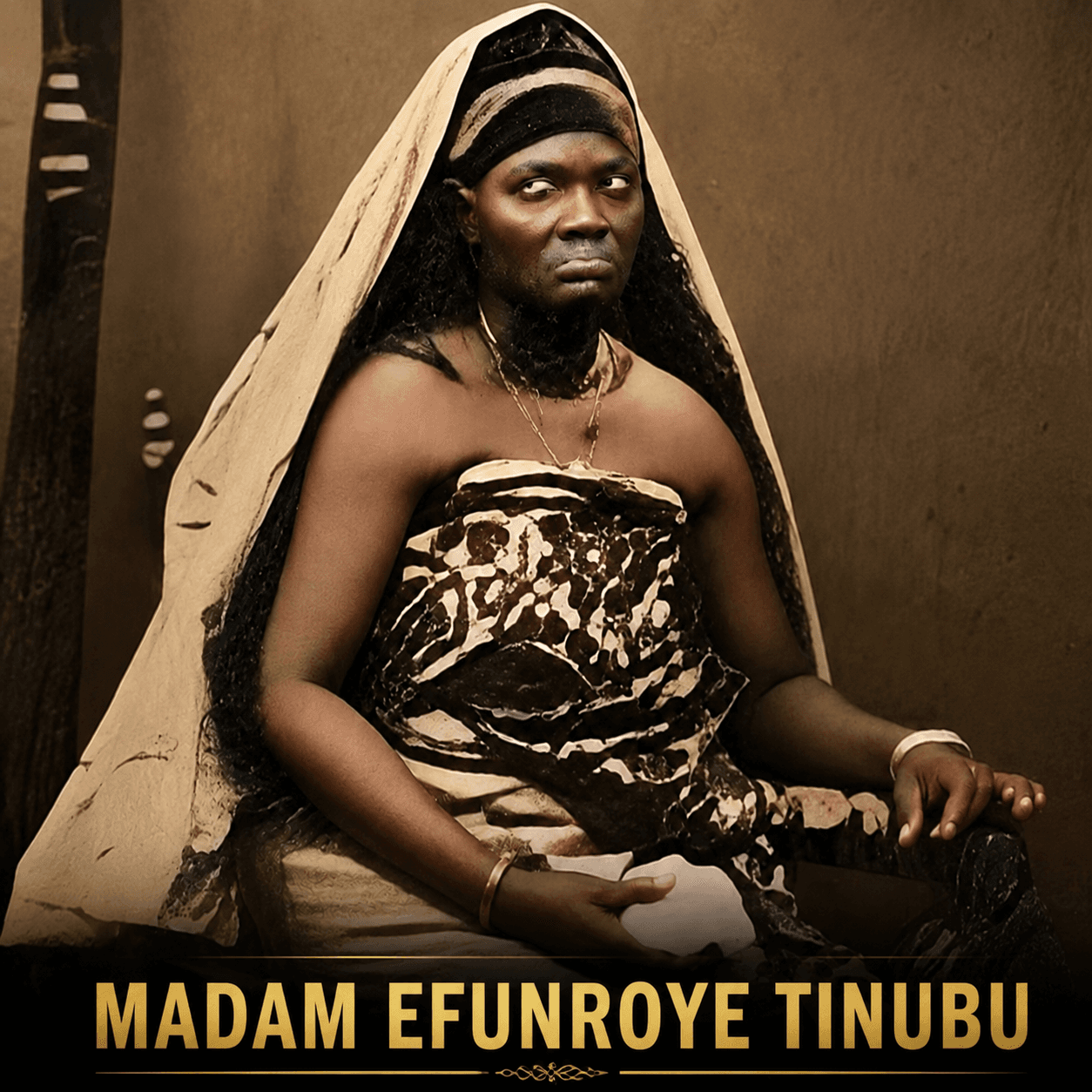
MADAM EFUNROYE TINUBU
Power, Commerce, Politics and Legacy
LESSON 006: EFUNROYE TINUBU, BRITISH POWER, AND HER EXIT FROM LAGOS
Was It Really Just About the Slave Trade?
In our previous lesson, we confronted one of the most uncomfortable parts of Madam Efunroye Tinubu's history.
We discussed her involvement in the slave trade, the claims surrounding her activities, and why we must separate documented history from stories that have simply been repeated over the years.
But there is another part of her story that deserves our attention.
Why was Efunroye Tinubu eventually forced to leave Lagos?
Was it because she participated in slave trading?
Was it because she challenged British authority?
Was it because she had become too influential in Lagos politics?
Or was it a combination of different interests that had finally reached a breaking point?
To understand what happened, we must return to Lagos after the events of 1851 and 1852.
Because something had changed.
This time, Efunroye was dealing with a power that did not operate according to the traditional political arrangements she understood.
LAGOS WAS NO LONGER THE SAME
Remember what happened in Lesson 004.
British forces attacked Lagos in December 1851.
Kosoko was driven from power.
Akitoye returned to the throne with British military support.
In January 1852, Akitoye signed a treaty aimed at suppressing the slave trade.
But the treaty was not the end of British involvement.
It was part of a new political relationship in which British officials expected to exercise considerable influence over Lagos.
The Oba still occupied the throne.
The chiefs still had their positions.
Local merchants continued their businesses.
But, British officials were increasingly involved in decisions affecting commerce, political authority, and the future of the city.
This created a difficult situation.
Because Lagos was not an empty place waiting for outsiders to organise it.
It already had political institutions.
It had powerful families.
It had merchants whose businesses depended on established trading networks.
It had people who were not necessarily willing to accept every demand made by British representatives.
One of those people was Efunroye Tinubu.
THE WOMAN WHO HAD BUILT HER OWN INFLUENCE
By this period, Efunroye was no longer simply known as the widow of Oba Adele.
She had become a wealthy and influential merchant in her own right.
She had commercial relationships.
She had political connections.
She had supported Akitoye during the struggle for the Lagos throne.
And she had interests that extended beyond one market or one ruler.
That kind of influence mattered in nineteenth-century Lagos.
A successful merchant could command resources, maintain relationships with important figures, and play a role in political affairs.
But influence could also create enemies.
Especially when different people wanted different things from the same political system.
Efunroye's commercial interests did not always align with British policies.
Her political influence also became a source of tension.
And those tensions would grow.
BUT BEFORE WE GO FURTHER, LET US REMEMBER SOMETHING
Britain had become a major force in suppressing the Atlantic slave trade by the middle of the nineteenth century.
But Britain had previously participated extensively in that same trade.
British ships had transported enslaved Africans.
British merchants and plantation owners had profited from enslaved labour.
British commercial interests had benefited from the Atlantic economy built around slavery.
So when we discuss British opposition to slave trading in Lagos, we must not tell the story as though Britain had always stood outside the system.
It had not.
Britain outlawed its own slave trade in 1807 and later took steps to suppress the wider Atlantic trade.
That change was historically significant.
But it did not erase Britain's earlier participation.
Neither did Britain's growing involvement in Lagos concern abolition alone.
Commerce mattered.
Political influence mattered.
Strategic interests mattered.
The relationship between British officials and African rulers was changing.
We must remember all of this before examining Efunroye's confrontation with British authority.
THEN CAME BENJAMIN CAMPBELL
One of the important British officials involved in this period was Benjamin Campbell, who served as British consul at Lagos.
A consul was a government representative responsible for protecting and advancing the interests of their country, particularly in matters involving trade and relations with local authorities.
Campbell's position gave him considerable influence in Lagos affairs.
He was involved in British efforts to suppress slave trading and strengthen British commercial and political interests.
But Efunroye was not an ordinary merchant with little influence.
She was already an established figure in the city.
Her commercial activities and political connections made her someone British officials could not simply ignore.
Over time, tensions between Campbell and Efunroye became increasingly serious.
Her continued association with slave trading was one issue.
Her political influence was another.
The growing reach of British authority added to the conflict.
This is why reducing the entire disagreement to one sentence would be misleading.
It was not simply a story of a British official confronting a slave trader.
Nor was it simply a story of an African woman resisting foreign interference.
Both slavery and political power formed part of the conflict.
And we must be willing to examine both.
WAS EFUNROYE FIGHTING FOR AFRICAN FREEDOM?
This is a question we need to address carefully.
Today, Efunroye Tinubu is sometimes remembered as a woman who resisted British interference.
There is a historical basis for discussing her opposition to British influence in Lagos.
But does that automatically mean she was fighting for African freedom in the modern sense?
We should not jump to that conclusion.
People in the nineteenth century did not necessarily understand political independence, commerce, or freedom in the same way we discuss them today.
Efunroye had her own interests.
She had businesses to protect.
She had political relationships to maintain.
And she had influence that she did not want to lose.
Her opposition to British interference could reflect several of those concerns.
This does not mean her resistance was unimportant.
It means we should be careful about assigning motives that the surviving evidence can not be fully established.
A person can resist foreign interference without necessarily opposing every form of injustice within their own society.
A person can challenge an expanding imperial power while also protecting commercial interests that included slavery.
That contradiction is uncomfortable.
But history does not become less truthful simply because it makes us uncomfortable.
A NEW OBA, A DIFFERENT POLITICAL ENVIRONMENT
In 1853, Oba Akitoye died.
He was succeeded by his son, Dosunmu, also commonly written as Docemo in historical records.
Dosunmu inherited a throne that was already operating under significant British pressure.
His position was not an easy one.
He had to navigate relationships with Lagos chiefs, merchants, rival political interests, and British representatives.
Efunroye remained an influential figure.
But the political environment was becoming less favourable to her.
Her relationship with British authorities continued to deteriorate.
The question of how much influence she should be allowed to exercise in Lagos became increasingly contentious.
Eventually, the conflict reached a point where her continued presence in the city was no longer acceptable to those seeking to restrict her influence.
THE YEAR 1856
In 1856, Efunroye Tinubu was forced to leave Lagos.
Her expulsion is commonly associated with pressure from British Consul Benjamin Campbell and the administration of Oba Dosunmu.
This was a major turning point.
Think about the journey we have followed since Lesson 001.
Efunroye had entered the coastal political world through her marriage to Adele.
She had developed important trading relationships.
She had lived through changes in the Lagos monarchy.
She had supported Akitoye.
She had accumulated wealth and political influence.
And now, after years of involvement in Lagos affairs, she was being pushed out of the city.
The place where she had built so much of her power was no longer a place where she could safely continue exercising it.
But we should be careful about how we describe what happened.
It would be too simple to say she was expelled only because she refused to stop slave trading.
It would also be too simple to say she was expelled only because she opposed British colonial ambitions.
Her commercial activities, political influence, and conflict with British authority were closely connected.
The surviving historical accounts point towards a struggle involving more than one issue.
And that is the distinction we must preserve.
DID BRITAIN ALREADY OWN LAGOS?
There is another important historical detail here.
Lagos had not yet been formally annexed by Britain when Efunroye was expelled in 1856.
British influence had grown substantially after the events of 1851 and 1852.
British officials were interfering in Lagos affairs.
British military power had already been demonstrated.
But formal annexation came later.
In 1861, Oba Dosunmu signed the treaty through which Lagos was ceded to Britain, under circumstances shaped by considerable British pressure.
That distinction matters.
When we discuss Efunroye's departure in 1856, we are discussing a period of expanding British influence before formal colonial annexation.
We should not confuse the two events.
Efunroye's expulsion happened in 1856.
British annexation of Lagos followed in 1861.
Both belong to the wider history of how political authority in Lagos was changing during the nineteenth century.
WHAT DID HER EXPULSION REALLY MEAN?
For Efunroye, leaving Lagos meant losing the immediate political and commercial position she had built there.
But her departure also tells us something about the changing balance of power.
A wealthy merchant who had once been influential in royal politics could now find herself confronting a British representative whose government possessed enormous military and diplomatic resources.
Traditional political influence was no longer always enough.
Commercial wealth was no longer always enough.
Even powerful connections within the Lagos establishment could become insufficient when British officials and local political interests acted against someone.
That was the environment in which Efunroye found herself.
But we should not assume that her expulsion made her powerless everywhere.
Because Lagos was not the whole of Yorubaland.
And Efunroye's story was not finished.
BACK TO ABEOKUTA
After leaving Lagos, Efunroye established herself in Abeokuta.
Remember Abeokuta from Lesson 002?
The city that had grown out of the displacement and political upheavals of the early nineteenth century?
The city where different Egba communities had rebuilt their lives?
That same Abeokuta would become an important centre of Efunroye's later life.
She continued her commercial activities.
She remained influential.
She eventually became associated with one of the most important traditional titles available to a woman in Egba society.
Ìyálóde.
But before we discuss that title, we need to understand what it represents.
Because Ìyálóde was not simply a decorative name given to a wealthy woman.
It was connected to leadership, representation, and influence within the community.
Efunroye's later position in Abeokuta would become another important part of her legacy.
SO, WAS EFUNROYE A VICTIM OR A RESISTER?
Some readers may be tempted to describe Efunroye's expulsion as proof that she was a victim of British imperial ambition.
Others may see it as the consequence of her continued involvement in slave trading.
Both interpretations focus on real elements of history.
But neither should be allowed to erase the others.
Efunroye had participated in a commercial system that included the buying and selling of enslaved people.
British officials opposed the continuation of that trade while also advancing British influence and interests in Lagos.
Efunroye resisted aspects of that growing authority.
Eventually, she was expelled.
These are the historical developments we can discuss without pretending that every participant acted from one simple motive.
The question is not whether we can find a label that makes Efunroye easy to remember.
The question is whether we are prepared to understand the complicated world in which she lived.
WHY THIS LESSON MATTERS
There is something I hope we are beginning to understand as we move through this series.
History is not always a competition to determine who was completely right and who was completely wrong.
Sometimes, the same person can challenge one form of power while benefiting from another.
Sometimes, a government can oppose an injustice while also pursuing political and commercial interests.
Sometimes, the people who appear powerful in one chapter of history become vulnerable when the political environment changes.
Efunroye Tinubu's departure from Lagos reminds us that wealth and influence do not guarantee permanent security.
But it also reminds us that losing power in one place does not always mean the end of a person's story.
Efunroye left Lagos.
She did not disappear from history.
Her next chapter would unfold in Abeokuta.
And there, another title would become closely associated with her name.
ÌYÁLÓDE EFUNROYE TINUBU.
What did that title mean?
How did she acquire it?
What influence did she exercise in Abeokuta?
And how should we understand that part of her legacy alongside everything we have already learned?
Those are the questions waiting for us.
TO BE CONTINUED...
YÀRÁ ÌTÀN | SERIES ONE: MADAM EFUNROYE TINUBU
NEXT: LESSON 007
ÌYÁLÓDE EFUNROYE TINUBU: POWER BEYOND LAGOS
Her Life, Leadership, and Influence in Abeokuta
We will explore the meaning of Ìyálóde, the place of influential women in Yoruba political and commercial life, and how Efunroye continued building her legacy after leaving Lagos
We remember. We question. We learn. We preserve.
Àṣà kì í kú.
Omolola TalksTV
Preserving Yoruba Culture Through Storytelling