YÀRÁ ÌTÀN | SERIES ONE
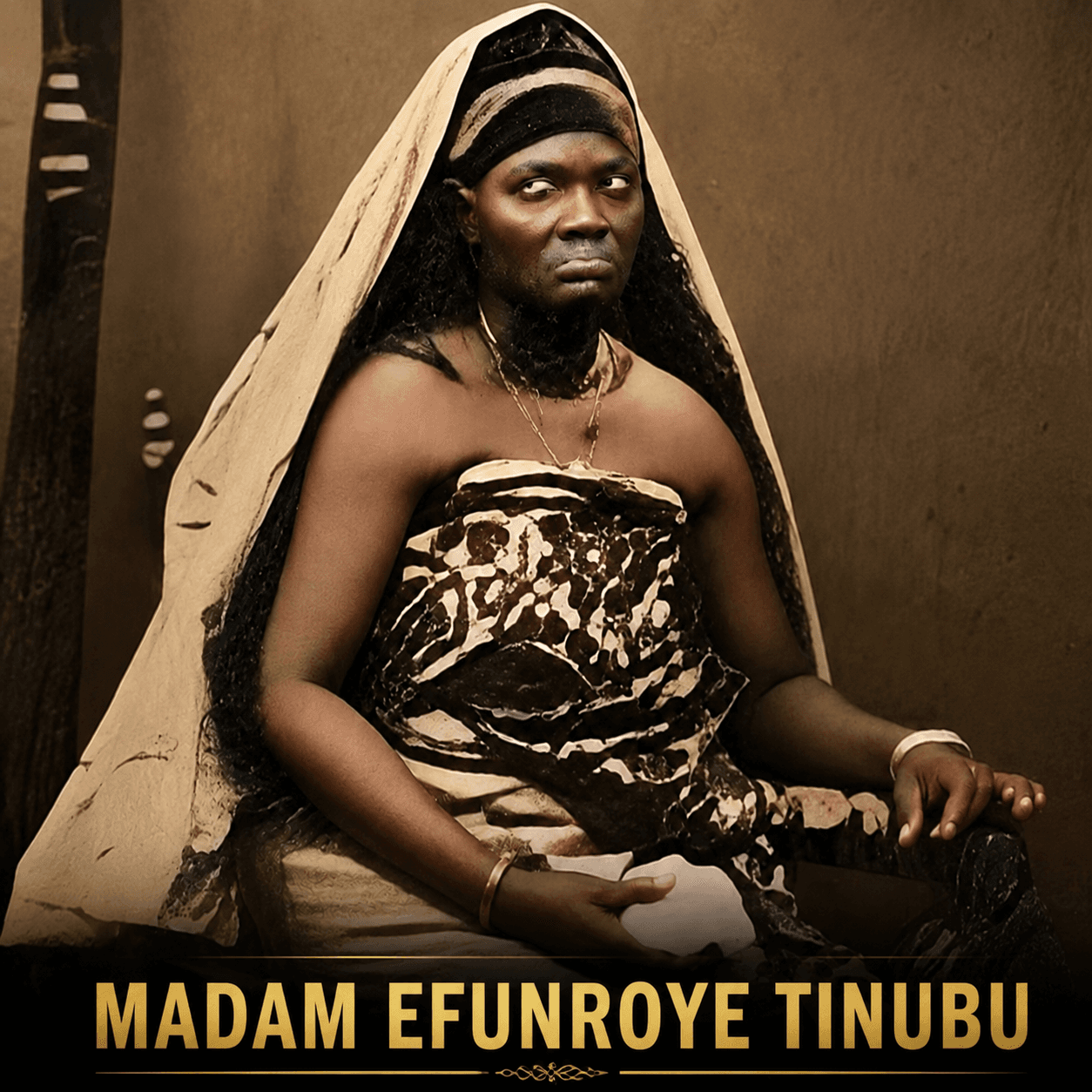
MADAM EFUNROYE TINUBU
Power, Commerce, Politics and Legacy
LESSON 003: EFUNROYE, OBA ADELE, AND THE ROAD TO LAGOS
The Marriage That Changed Her Story
In Lesson 002, we deliberately stepped away from Efunroye Tinubu for a moment.
We looked at the world around her.
A Yorubaland shaken by war.
People displaced from their homes.
Abeokuta is rising as a place of refuge.
Badagry is growing as an important commercial centre.
And Lagos is becoming increasingly important in the politics and trade of the coast.
Now, we return to Efunroye.
Because somewhere in that changing world, her life was about to take a completely different direction.
And at the centre of that change was a man who had lost a throne.
His name was Adele Ajosun.
BEFORE EFUNROYE, THERE WAS ALREADY A STRUGGLE FOR LAGOS
One mistake we must avoid is entering this story as though Lagos politics began when Efunroye arrived.
It did not.
Lagos already had its own royal system, chiefs, powerful families, commercial interests, and struggles over succession.
Adele had ruled Lagos earlier in the nineteenth century, but political conflict eventually pushed him from the throne.
He went into exile.
One of the places where he established himself was Badagry.
That detail is important.
Because Badagry was not simply somewhere to hide.
It was commercially valuable.
The town sat within trading networks connecting the interior with the coast and the wider Atlantic world.
African merchants operated there.
European traders operated there.
Goods changed hands there.
And tragically, so did human beings.
Badagry, therefore, offered Adele something beyond refuge.
It kept him connected to commerce and to the political world around Lagos.
It was during this period that Efunroye's path became connected with his.
EFUNROYE MARRIES ADELE
Around 1833, Efunroye married Adele.
By then, she was not entering adulthood without any experience of trade. Accounts of her life describe her as already commercially active, and she had previously been married.
But marrying Adele opened another door entirely.
This was no longer only about selling within familiar local networks.
She was now connected to a man with royal status, political relationships, and access to an important coastal trading environment.
She moved with Adele to Badagry.
This is where we begin to see the woman who would later become one of the most powerful merchants of her generation.
BADAGRY CHANGED THE SIZE OF HER WORLD
Imagine the difference.
Trading locally is one thing.
Finding yourself in a coastal commercial centre where African merchants, European traders, royal interests, and long-distance trading networks meet is another.
Efunroye saw opportunities.
And she used them.
She became involved in a wider range of commerce, including commodities such as salt and tobacco.
But we can not tell this story neatly and quietly stop there.
Another commodity being traded through these networks was the one commodity that should never have become a commodity at all.
Human beings.
Efunroye became involved in slave trading.
Later in this series, we are going to devote a full lesson to that part of her life because it deserves more than one paragraph.
We will examine what the historical evidence actually tells us, what claims can be verified, what is disputed, and how African participation fitted into the much larger Atlantic slave-trading system.
We will neither hide it nor exaggerate it.
For now, what matters is understanding that Badagry exposed Efunroye to a commercial world much larger than the one from which she had come.
And she learned how to operate inside it.
THEN THE THRONE CHANGED AGAIN
Adele's exile did not last forever.
In 1835, he returned to the throne of Lagos.
And Efunroye went with him.
Think about what that meant for her.
The woman who had been developing her trading interests in Badagry was now connected directly to the palace of one of the most commercially important coastal towns in the region.
But there is something important we should say here.
We should not reduce Efunroye's rise to:
“She married a king and became powerful.”
That would be too easy.
Marriage gave her access.
It gave her connections.
It brought her closer to royal politics and wider commercial networks.
But access alone does not build the kind of influence Efunroye later possessed.
She knew how to use the opportunities available to her.
That difference matters.
Many people stand beside power.
Very few learn how to build power of their own.
Efunroye did.
HER CONNECTION TO ADELE DID NOT LAST LONG
Adele's second reign was short.
He died in 1837.
Efunroye was once again a widow.
It could easily have been the end of her access to Lagos royal politics.
Instead, it became another beginning.
By this point, she had already built relationships of her own.
She had commercial interests.
She understood the trading environment.
She knew influential people.
And perhaps most importantly, she was no longer simply known because of the man she married.
Efunroye herself was becoming somebody people had to reckon with.
That distinction will become even clearer as our story continues.
FROM ROYAL WIFE TO POLITICAL PLAYER
After Adele's death, the Lagos throne passed to Oluwole, Adele's son.
Efunroye remained connected to the political establishment.
She later married Yesufu Bada, also known as Obadina, who was associated with the military establishment around Oba Oluwole.
Look carefully at what is happening.
Her first important connection brought her into Adele's political circle.
Adele died.
But Efunroye did not disappear from Lagos politics.
Another Oba came.
She remained.
Political alliances shifted.
She remained.
Her commercial influence continued growing.
She remained.
This is where her story becomes bigger than marriage.
A WOMAN INSIDE A WORLD DOMINATED BY MEN
We should also remember the century we are discussing.
This was the nineteenth century.
Political authority was overwhelmingly concentrated among men.
Kings were men.
Military leadership was largely male.
Many of the people negotiating political power were men.
Yet Efunroye managed to become deeply involved in that world.
Not from the sidelines.
From inside it.
Her wealth gave her influence.
Her relationships gave her access.
Her commercial networks made her useful.
Over time, she became involved in questions far bigger than buying and selling.
Including the question of who should sit on the throne of Lagos.
This is where the word often attached to her name begins to make sense:
Kingmaker.
But even that word needs to be handled carefully.
Because Efunroye did not simply wake up one morning and decide who would rule Lagos.
Lagos had chiefs, royal families, rival factions, and established political interests.
What she possessed was influence within that complicated system.
And soon, that influence would be tested.
THEN CAME ANOTHER TRAGEDY
Oba Oluwole's reign also ended suddenly.
In 1841, an explosion involving stored gunpowder devastated the palace and killed the Oba.
Once again, Lagos faced the question that had caused so much tension before:
Who should become king?
This time, two names would become central to what followed.
Akitoye.
And Kosoko.
Their struggle would change Lagos.
It would pull Efunroye deeper into royal politics.
It would bring British interests closer to the centre of Lagos affairs.
Eventually, it would help create one of the most important turning points in the history of the city.
But before we reach the British bombardment of Lagos, before treaties and abolition enter our story fully, we need to understand the people fighting for the throne.
Because Efunroye was about to choose a side.
And her choice would have consequences.
WHY THIS LESSON MATTERS
It is easy to look at Efunroye Tinubu after she became wealthy and powerful and assumed that her rise happened overnight.
It did not.
Her story developed through movement.
From the world of inland Yoruba commerce.
To Badagry.
From Badagry to Lagos.
From trading networks to royal connections.
From royal connections to political influence.
Throughout that journey, we also see something uncomfortable beginning to emerge.
Her wealth and influence were built within a commercial world that included legitimate commodities, political relationships, and the buying and selling of enslaved people.
All of those truths belong to the same history.
We do not need to remove one to tell another.
That is the whole purpose of Yàrá Ìtàn.
Not to give our ancestors halos.
Not to give them horns.
But to understand them as completely as the surviving evidence allows us.
Efunroye's story is only beginning.
Lagos is about to enter one of the most turbulent chapters in its history.
TO BE CONTINUED...
YÀRÁ ÌTÀN | SERIES ONE: MADAM EFUNROYE TINUBU
NEXT: LESSON 004
AKITOYE, KOSOKO, AND THE BATTLE FOR THE LAGOS THRONE
When Efunroye Tinubu Became More Than a Merchant
We remember. We question. We learn. We preserve.
Àṣà kì í kú.
Omolola TalksTV
Preserving Yoruba Culture Through Storytelling