Our Yoruba Traditions Are Not Dirty: Solomon Buchi, Ìṣẹ̀ṣe and the Religion of Humanity
October 12, 2026 | Omolola TalksTV
There is something I find deeply painful about the way some Africans speak about their own indigenous traditions.
Not because everybody must practise traditional religion.
Not because our culture should never be questioned.
But because some people have become so comfortable insulting what they have never taken the time to understand.
And sometimes, I wonder how we arrived at this point.
How did we become people who can admire the traditions of other nations, study their ancient religions and celebrate their historical monuments, yet look at our own ancestral practices and immediately describe them as evil, dirty or backward?
Who taught us to see ourselves this way?
And more importantly, why are we still comfortable repeating those descriptions today?
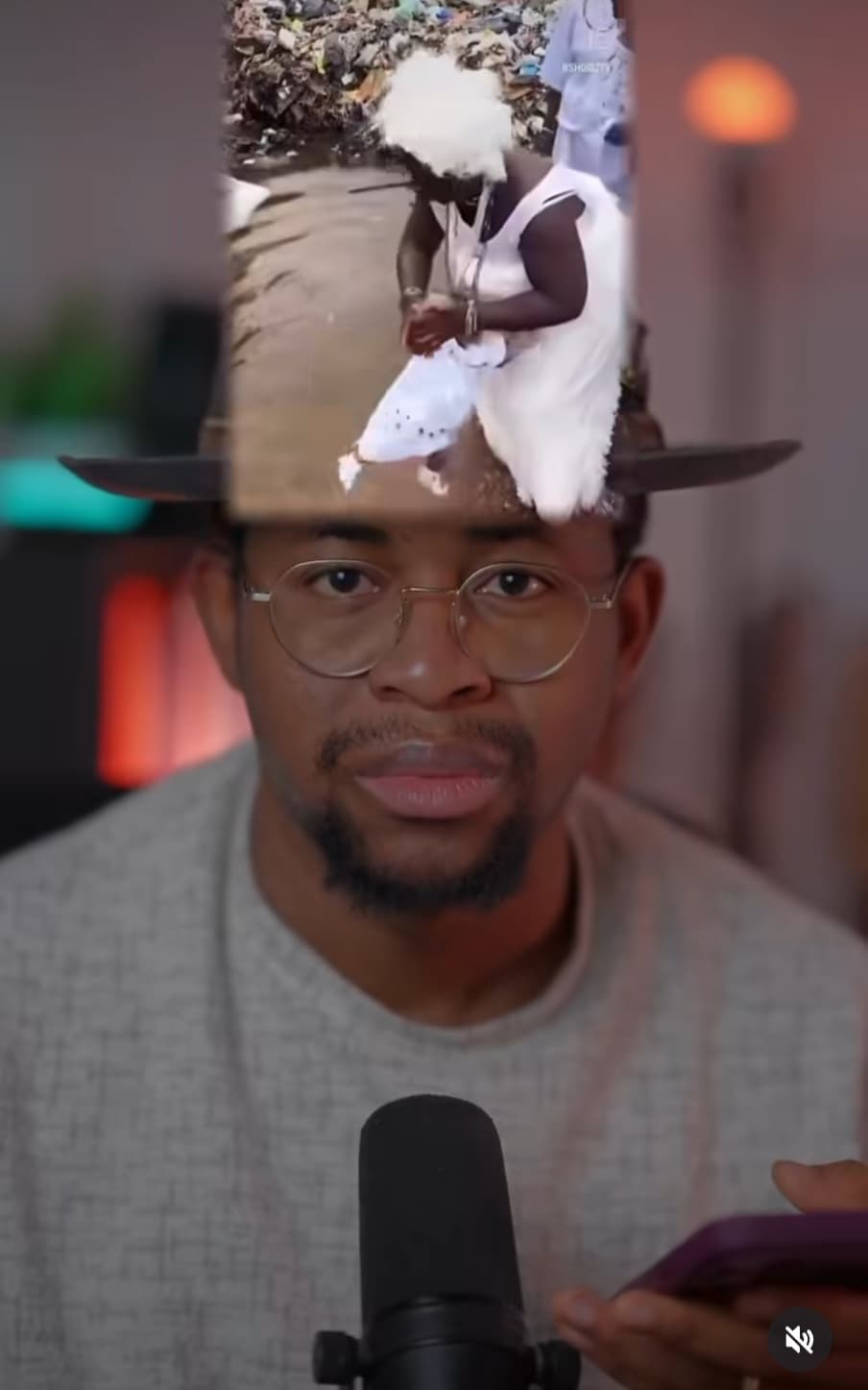
A recent social media controversy involving Solomon Buchi and footage of a child participating in what appears to be a Yoruba traditional religious ceremony has brought these questions back to my mind.
But this article is not simply about Solomon Buchi.
It is about something much bigger.
Our identity.
Our history.
Our understanding of religion.
And the respect we owe one another as human beings.
Solomon Buchi, Who Asked You to Leave Jesus?
In a recent Instagram post reacting to the video, Solomon Buchi wrote:
“Is this the god I should leave Jesus for? What has this god done for humanity apart from requesting Fanta?”
When I read that statement, I had to ask myself a question.
Who asked him to leave Jesus?
Who said that respecting Yoruba traditional religion means abandoning Christianity?
Nobody should be forced to leave their faith to accommodate another person's beliefs.
If you are a Christian, practise your Christianity.
If you are a Muslim, practise your Islam.
If you are an Ìṣẹ̀ṣe practitioner, you should equally have the freedom to practise your religion.
But why must another person's faith become an object of ridicule before you can demonstrate how strongly you believe in yours?
And why should a religious offering become something to mock simply because it is unfamiliar to you?
Different religions have their own forms of worship, offerings, prayers, sacred objects and ceremonies.
What one person considers ordinary within their religion may appear unusual to someone outside it.
That difference should encourage curiosity, not contempt.
You do not have to leave Jesus to respect Ọ̀ṣun.
And you do not have to worship Ọ̀ṣun to recognise the dignity of those who do.
It really should not be that difficult.
Our Ancestors Were Not Without Spiritual Understanding
Sometimes, the way people discuss African traditional religion makes it sound as though our ancestors had no understanding of spirituality until foreign religions arrived.
That is simply not an accurate account of our history.
Long before Christianity and Islam became widely established in Yorubaland, Yoruba communities had developed religious beliefs, sacred traditions, philosophical ideas and systems of worship.
Within Yoruba traditional religious thought, Olódùmarè is understood as the Supreme Being.
The Òrìṣà occupy important places within that religious worldview, although beliefs and interpretations differ among practitioners and communities.
Ọ̀ṣun, for example, is associated with rivers, fertility and other aspects of spiritual and communal life.
The Osun-Osogbo Sacred Grove is recognised by UNESCO as a World Heritage Site because of its outstanding cultural significance and living religious traditions.
That recognition does not mean everyone must believe in Ọ̀ṣun.
It means the heritage has historical, cultural and spiritual importance worthy of understanding and preservation.
We can disagree about religious beliefs without denying the existence or significance of the traditions that shaped our ancestors' lives.
Our people had names for the Divine.
They had moral teachings.
They had ceremonies, sacred places, oral literature and ways of understanding their relationship with the world.
We should be able to acknowledge those facts without feeling that our present religious identities are under threat.
The Colonial Influence We Must Be Honest About
To understand why African traditional religion is sometimes treated with such contempt, we must examine history.
During the colonial and missionary periods, African indigenous religions were frequently described using terms such as paganism, superstition and primitive worship.
Some missionaries and colonial writers approached African spiritual systems from the assumption that European religious and cultural ideas were superior.
Those attitudes influenced how African beliefs were represented and how some Africans came to understand their own heritage.
But history is more complicated than simply saying Europeans brought religion and Africans accepted everything without question.
Africans actively participated in religious change.
Christianity and Islam developed deep roots within Yoruba society through different historical processes, including trade, scholarship, missionary activity, conversion and local adaptation.
Many Yoruba Christians and Muslims have contributed enormously to education, community development and public life.
That deserves recognition.
But recognising those contributions should not require us to pretend that everything our ancestors practised was evil.
We can acknowledge the influence of colonialism without blaming every Christian living today.
We can appreciate Christianity and Islam without insulting Ìṣẹ̀ṣe.
And we can preserve Yoruba heritage without demanding that everybody return to traditional worship.
Choosing a different religion should never require you to hate your ancestry.
Why Is African Worship So Easily Ridiculed?
This is one question I wish more people would consider.
Around the world, religious communities use water, oil, candles, incense, sacred objects, food offerings and ceremonial clothing in different forms of worship.
These practices carry meanings within their respective religious traditions.
Yet when some people encounter offerings associated with Yoruba traditional worship, the conversation immediately turns to mockery.
Why?
If we are genuinely interested in understanding religion, should we not ask what the offering represents?
Should we not learn about the history of the ceremony?
Should we not speak to people who actually practise the religion?
An outsider may see an object.
A practitioner may see a symbol of devotion, gratitude, obligation or spiritual relationship.
You do not have to share that interpretation.
But you should at least understand that your interpretation is not necessarily the only one.
Religion is too important to people's identities and communities to be reduced to jokes about what appears in a short social media video.
And What About the Child in the Video?
Now, let me address something important.
The video at the centre of this discussion involves a child.
As a mother and someone who takes children's welfare seriously, I cannot ignore that.
If a child is participating in a religious ceremony involving water, it is reasonable to ask questions about safety.
Was the child protected?
Was the water safe?
Were appropriate precautions taken?
What happened before and after the portion shown online?
These are legitimate questions.
And I would ask them regardless of the religion involved.
Whether a child is participating in a Christian baptism, an Islamic ceremony or an Ìṣẹ̀ṣe ritual, that child's safety must come first.
We should never defend a practice simply because it belongs to our culture if there is evidence that a child is being harmed.
But we should also be careful not to assume that every unfamiliar ceremony is abusive.
A short video may not provide enough information to determine what actually happened.
If there is evidence of danger, let us address it.
If there is evidence of abuse, let us protect the child.
But let us not use an unverified incident to condemn an entire religious tradition.
Protecting children and respecting indigenous religion are responsibilities that can exist together.
Ìṣẹ̀ṣe and the Beauty of Religious Coexistence
There is something I have observed about many people who practise Ìṣẹ̀ṣe.
They continue to honour their ancestral traditions, celebrate their festivals, observe their ceremonies and maintain their spiritual lives, often while living alongside neighbours who practise Christianity or Islam.
That ability to coexist deserves recognition.
Of course, no religion has a monopoly on tolerance.
Every religious community is made up of human beings, and human beings are capable of both kindness and wrongdoing.
We should not pretend that any tradition has a completely perfect history.
But I do believe we can learn from the peaceful relationships that exist among people of different faiths in our communities.
The presence of Christianity or Islam in Yorubaland should not mean that traditional worshippers must disappear.
Likewise, preserving Ìṣẹ̀ṣe should not mean hostility towards Christians or Muslims.
Why should we not be able to live together?
Why should a Christian neighbour be unable to respect an Ìṣẹ̀ṣe festival?
Why should a Muslim neighbour feel threatened simply because someone else practises traditional worship?
And why should an Ìṣẹ̀ṣe practitioner be denied the same respect that other religious communities expect?
We are all human beings before we begin arguing about the differences in our religious practices.
We may not agree on everything.
But we can agree that nobody deserves humiliation because of their faith.
Perhaps the Greatest Expression of Religion Is How We Treat One Another
Let me ask something.
And I want us to think about it sincerely.
What is the value of loudly proclaiming your religion if your everyday conduct contradicts the goodness you claim to believe in?
You attend religious gatherings regularly, but how do you treat your neighbours?
You pray, but do you show compassion to people who are struggling?
You speak passionately about God, but are you honest in your dealings with others?
You condemn another person's worship, but can you respect someone whose beliefs differ from yours?
Sometimes, we become so concerned about proving that our religion is superior that we forget to examine our own character.
I am not suggesting that prayers, worship or religious teachings are meaningless.
They matter deeply to those who practise them.
But surely, kindness matters too.
Honesty matters.
Compassion matters.
Fairness matters.
And respect for human dignity matters.
When I ask whether our greatest expression of religion might be found in our hearts, I am asking us to examine the values we demonstrate through our actions.
What kind of human being are you becoming?
Are your daily actions consistent with the goodness you believe Olódùmarè expects of humanity?
Do people experience compassion through you?
Do they experience fairness?
Do they feel respected in your presence?
Perhaps we should spend more time asking ourselves these questions instead of constantly trying to prove that someone else's religion is worthless.
If your religion teaches love, let people experience that love through your character.
What Did Jesus Teach About Worship and Love?
Since Solomon Buchi's statement specifically invokes Jesus, I think it is fair to reflect on some biblical teachings.
In Matthew 4:10, Jesus directs worship and service to God alone.
In John 4:23–24, he speaks about worshipping the Father in spirit and truth.
And in Matthew 22:37–39, Jesus identifies love for God and love for one's neighbour as central commandments.
Christians understand these teachings within their own theological traditions, and interpretations of Jesus' identity and worship differ across religious communities.
But one point deserves reflection.
How does ridiculing another person's faith demonstrate love for one's neighbour?
How does humiliating people because of their ancestral religion promote peaceful coexistence?
You can hold firmly to your Christian convictions without making another person's religion an object of contempt.
The same responsibility applies to followers of other religions.
An Ìṣẹ̀ṣe practitioner should not insult Christians or Muslims simply because their beliefs differ.
A Muslim should not be ridiculed for practising Islam.
And a Christian should not be treated as an enemy for following Christianity.
Religious freedom must work in every direction.
Otherwise, what we are defending is not freedom but preference.
Ọ̀run Nìkan Ló Mọ Ẹni Tí Yóò Là
There is a Yoruba expression I want us to reflect on:
“Ọ̀run nìkan ló mọ ẹni tí yóò là.”
In this spiritual context, I understand it as a reminder that only Heaven knows who will ultimately be saved.
It speaks to the limits of human knowledge.
Who among us knows everything about another person's relationship with the Divine?
Who has been given the authority to pronounce the final spiritual destiny of every human being?
We may hold different beliefs about salvation, judgment and the afterlife.
But should those differences make us arrogant?
Should they make us cruel?
Should they give us permission to look down on people whose spiritual understanding differs from ours?
I do not think so.
Sometimes, humility is simply recognising that we do not know everything.
And perhaps we should be more concerned about the way we live than about appointing ourselves judges over the souls of others.
Our Culture Is Not Beyond Questioning
Let me make something clear.
Defending Yoruba heritage does not mean pretending that every traditional practice is perfect.
Our ancestors were human beings.
They developed customs, institutions and beliefs within the circumstances of their time.
Some practices deserve preservation.
Some deserve further study.
And some may need to change where they conflict with human dignity, safety or children's rights.
That is not cultural betrayal.
It is part of how societies grow.
But questioning a cultural practice should begin with understanding.
Criticism should be based on evidence.
And disagreement should not become an excuse for contempt.
If something is harmful, let us identify the harm.
If a practice places children at risk, let us address that risk.
If there is misinformation, let us correct it.
But let us not describe an entire people or religion as dirty simply because their traditions differ from ours.
Where Omolola TalksTV Stands
At Omolola TalksTV, preserving Yoruba culture means more than celebrating traditional clothing, festivals, food and language.
It means understanding our history.
It means asking questions about how our traditions developed.
It means challenging misrepresentations.
And it means creating space for conversations that may sometimes be uncomfortable.
We believe Yoruba heritage deserves to be studied and represented fairly.
We also believe that children deserve protection and that cultural preservation must never become an excuse for ignoring human dignity.
Our platform is not asking anyone to abandon Christianity, Islam or any other faith.
We are asking for mutual respect.
We are asking that indigenous African religions be discussed with the same seriousness and fairness that other religious traditions receive.
We are asking that people learn to distinguish between questioning a practice and insulting a people.
And we are asking that the younger generation be given the opportunity to understand their cultural history without being taught to despise it.
My Perspective
What troubles me most about this controversy is not that Solomon Buchi believes in Jesus.
He has every right to his faith.
What troubles me is the idea that another person's sacred tradition must be ridiculed to demonstrate that belief.
Nobody asked him to leave Jesus.
And nobody should have to abandon their own religion to earn respect.
If we are sincere with ourselves, we will acknowledge that religious intolerance has caused enough division in our societies.
We do not need more of it.
What we need is understanding.
What we need is humility.
What we need is the willingness to learn before condemning.
And what we need, perhaps more than anything else, is the courage to examine our own character.
Because long after the arguments about whose religion is superior have ended, people will still remember how we treated them.
They will remember whether we showed compassion.
Whether we were fair.
Whether we respected their dignity.
And whether our actions reflected the goodness we so confidently preached.
To Solomon Buchi and everyone who encounters a religious practice they do not understand, I would simply say this:
Ask questions.
Learn its history.
Speak to those who practise it.
If there is a genuine concern about safety or human rights, raise it responsibly.
But do not confuse religious conviction with the freedom to humiliate others.
Our Yoruba traditions are not dirty simply because they are different from your beliefs.
You do not have to practise Ìṣẹ̀ṣe to respect its followers.
You do not have to abandon your faith to respect mine.
And we do not have to worship in the same way to recognise our shared humanity.
Perhaps the question we should all be asking is not simply, “Which religion do you practise?”
But, “What kind of human being has your religion helped you become?”
That is my perspective.
✍️ Omolola Adepeju
Founder & Managing Director, Omolola TalksTV
Preserving our heritage. Encouraging understanding. Respecting our shared humanity.