OLOJO FESTIVAL 2026: MORE THAN A FESTIVAL, A HERITAGE THAT STILL SPEAKS
There are some celebrations you watch simply for the beauty.
Then there are others that make you pause and ask, “What is the story behind this?”
Olojo Festival is one of them.
As Ile-Ife celebrates Olojo Festival 2026, and this year's programme gradually moves towards its final day tomorrow, September 28, I think this is a good opportunity for us at Omolola TalksTV to do more than say, Happy Olojo Festival.
Let us talk about what we are celebrating.
Because behind the colourful clothes, drums, processions, and gatherings is a tradition that has travelled through generations.
And that is something worth preserving.
What Is Olojo?
Olojo is one of the important traditional festivals associated with Ile-Ife, regarded in Yoruba tradition as the cradle of the Yoruba people.
The name itself carries meaning.
Olojo can be understood as “the owner of the day” or “the one who owns the day.”
The festival is deeply connected with Yoruba traditional history, spirituality, and remembrance of Ogun, the deity associated with iron, courage, labour, and warfare.
For generations, the festival has brought together tradition, kingship, spirituality, and community.
But perhaps one of its most fascinating aspects is what happens before the public celebration even begins.
When the Ooni Goes Into Seclusion
One of the important traditions associated with Olojo is the period of seclusion observed by the Ooni of Ife.
Before his public appearance during the festival, the Ooni spent several days in seclusion.
This is not simply about staying away from the public.
Traditionally, it is regarded as a period of spiritual reflection, prayer, and communion with the ancestors, with prayers offered for Ile-Ife, the Yoruba people, and humanity.
Then comes the moment many people wait to see.
The Ooni emerges.
And with that emergence comes one of the most recognised symbols of the Olojo Festival.
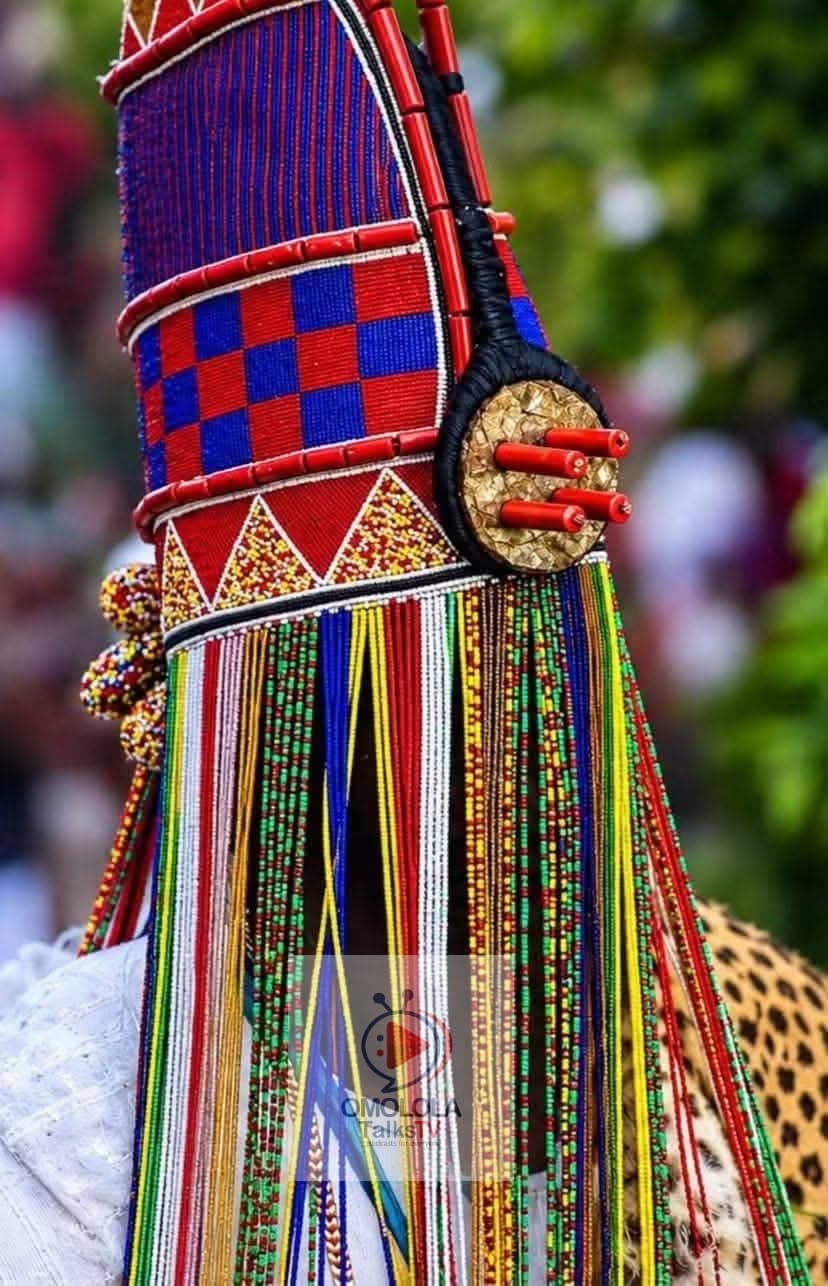
The Aree Crown
If you have ever watched Olojo and wondered why so much attention is given to the crown worn by the Ooni, you are looking at something regarded as much more than royal decoration.
The Aare crown occupies a special place in the tradition surrounding Olojo.
It is not treated like an everyday crown.
Its appearance is closely associated with the festival and carries deep historical and spiritual significance within Ile-Ife tradition.
This is one of those moments where culture reminds us that an object can carry generations of memory.
Someone unfamiliar with the tradition may simply see a beautiful crown.
But to the people who inherited its history, it represents much more.
That is why understanding culture matters.
Oke Mogun and the Procession
Another important part of Olojo is the cultural procession associated with Oke Mogun.
Ogun occupies a significant place in Yoruba history and traditional belief, particularly because of the importance of iron to human development.
Think about farming.
Think about hunting.
Think about tools.
Think about craftsmanship.
Think about warfare in earlier Yoruba societies.
Iron touched almost everything.
So when we talk about Ogun within Yoruba culture, we should not reduce the conversation to the frightening images sometimes presented in films.
There is history behind these traditions.
There is philosophy behind them.
There are stories about work, courage, technology, survival, and civilisation.
We may practise different religions today, and we may understand spirituality differently, but understanding the beliefs of our ancestors is part of understanding where we came from.
Learning about a tradition is not the same thing as forcing anyone to practise it.
That distinction is important.
Olojo 2026 Has Been More Than One Day
This year's programme also shows that Olojo is not simply one procession happening on one afternoon.
Activities began on September 24 with the Ayo Olopon traditional game and Olojo Festival colloquium.
September 25 included community cleansing and the Oonirisa's message.
September 26 featured Ojo Okemogun and the Aree cultural procession.
Today, September 27, is Ojo Ajoyo, with the Grand Royal Reception and other cultural activities.
And tomorrow, September 28, the programme concludes with Ojo Ibile, alongside the Cultural Talents Hunt final.
Different activities, but one celebration of heritage.
Our Children Must Know Why
This is perhaps the part closest to my heart.
It is good for our children to see beautiful pictures from Olojo.
It is good for them to watch the procession.
It is good for them to admire traditional clothing and hear the drums.
But that cannot be where it ends.
They should be able to ask:
What is Olojo?
Why is it celebrated in Ile-Ife?
What is the significance of the Aree crown?
Why does the Ooni go into seclusion?
What does Oke Mogun represent?
And somebody should be able to answer them.
When we stop explaining our culture, eventually we are left with ceremonies whose meanings nobody remembers.
That is how heritage slowly disappears.
Culture Must Be Preserved With Knowledge
Preserving Yoruba culture does not mean pretending that everything from the past must remain exactly as it was.
Cultures grow.
Societies change.
People ask new questions.
But before we discard something, condemn it, or even celebrate it, we should first understand it.
Document the history.
Record the elders.
Explain the symbols.
Teach the language.
Preserve the stories.
Let our festivals be beautiful, yes, but let them also remain classrooms where another generation can learn who they are and where they came from.
As Olojo Festival 2026 comes to its conclusion tomorrow, congratulations to His Imperial Majesty, the Ooni of Ife, the people of Ile-Ife, organisers, traditional custodians, participants and everyone working to keep this heritage alive.
May our culture never become something our children only recognise from old photographs.
May they know the stories behind it, too.
Happy Olojo Festival 2026.
And our Olojo conversation will not end here.
Have you ever looked closely at the Ade Aree worn by the Ooni during Olojo and wondered what the different symbols on it represent?
The crown itself has a story to tell.
In our next Culture & Tradition feature, we will take a closer look at the Ade Aree — its symbols, what they represent, why it is significant to Olojo, and the history surrounding this special crown.
Because sometimes we see our cultural symbols every year without really knowing the stories they carry.
One race. One source. One festival.
At Omolola TalksTV, we preserve our culture, revisit our history, tell our stories, and keep important conversations alive.
If you enjoy stories and conversations like this, subscribe to Omolola TalksTV and join us as we continue learning, documenting, and telling our stories in our own voice.
Happy Olojo Festival to His Imperial Majesty, the Ooni of Ife, the people of Ile-Ife and the entire Yoruba people at home and across the world. 👑❤️
May our heritage continue to speak, and may the generations coming after us never lose the stories that make us who we are.
Odun a yabo fun gbogbo wa. Ase. 🙏🏾
Our stories deserve to be told by us, too.
— Omolola TalksTV